Phantasy
The Golden Age of English Gamba Consorts
Jiřská 3/1, Pražský hrad, Praha 1
Artists
Programme
Henry Purcell (1659–1695)
Fantasias 4, 7, 9, 12
Dance for the Fairies
Pavan and Chaconne
Giles Farnaby (ca 1560–1640)
Daphne on the Rainbow
John Playford (1623–1687)
The Duke of Norfolk or St. Paul Steeple
Tobias Hume (ca 1569–1645)
The Spirit of Gambo
The Passion of Musick
William Cranford (17th century)
Walsingham Variations for 4 Viols
Thomas Weelkes (1576–1623)
Young Cupid Hath Proclaim’d
John Blow (1649–1708)
Saraband For the Graces
Dance of Cupids
Dance by a Huntsman
Martin Peerson (1571–1631)
Now Robin Laugh and Sing
Anonymous
When Daphne from Fair Phoebus Did Fly
Bagpipe
Upon La Mi Re
etc.
Annotation
Thanks to its velvety, silvery tone and wide range of articulation techniques – from a gentle whisper to energetic, dramatic accents – the viola da gamba is rightly considered one of the most beloved instruments in music history… Its ability to embrace a space and turn silence into melodious sound was certainly very popular in 16th- and 17th-century England. At the concert in Lobkowicz Palace, listeners will be transported to the golden age of English viola da gamba consorts, together with the members of the Vittorio Ghielmi Viol Quartet, in whose hands these instruments speak like the human voice and convey deep emotion.
The programme, composed of works by both renowned and nearly forgotten composers, contains numerous references to ancient deities, supernatural beings, and well-known mythological tales. At the heart of the evening are Purcell’s Fantasies, which are considered among the finest and most complex works of the genre, encompassing elaborate counterpoint and perfect mastery of all the polyphonic techniques of the time.
Venue
Jiřská 3/1, Pražský hrad, Praha 1
Show on mapPartners of the concert
The concert is held in collaboration with the House of Lobkowicz.
Artists
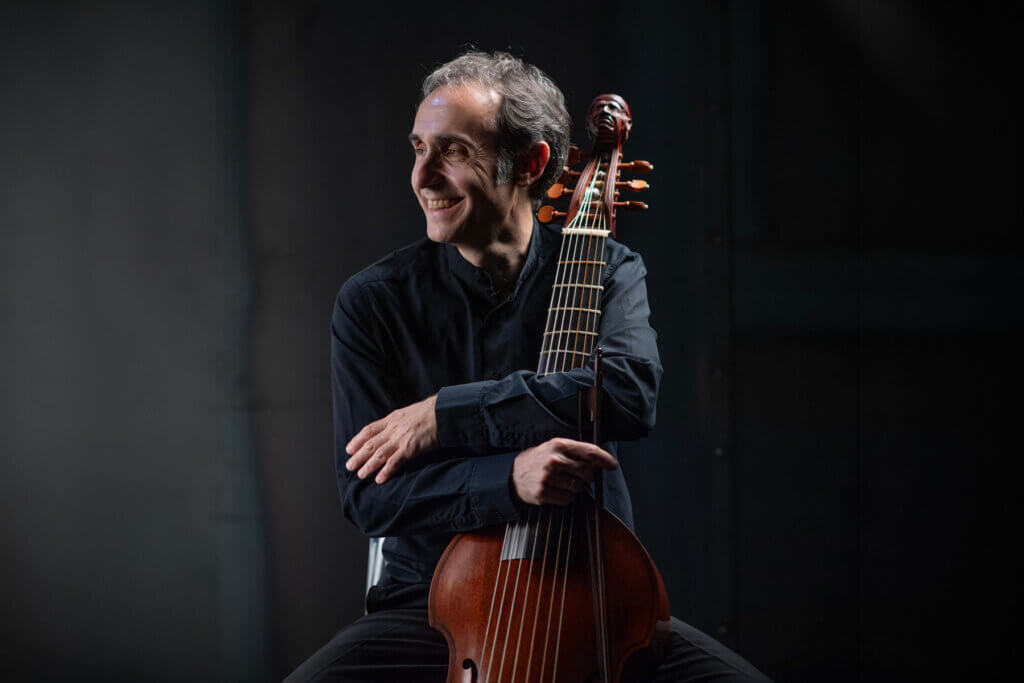
Vittorio Ghielmi
soprano and bass viola da gamba, art. director
Vittorio Ghielmi is a viola da gamba player, conductor, composer, and Head of the Department of Early Music at the Universität Mozarteum Salzburg. Compared by critics to Jascha Heifetz (Diapason) for his virtuosity, he has gained recognition for his innovative approach to the viol and to the sound of the Baroque and Classical repertoire. His research and artistic work on the nature of sound have made him a sought-after guest conductor for both modern and period orchestras.
As one of the leading figures of the early music scene, Ghielmi has shared the stage from a very young age with renowned artists such as Gustav Leonhardt (duo), Cecilia Bartoli, and András Schiff. He appears regularly as a soloist or conductor with major orchestras (including Staatskapelle Berlin, the Los Angeles Philharmonic at the Hollywood Bowl, the London Philharmonic Orchestra, the Wiener Philharmoniker, the Wiener Concert-Verein, etc.) as well as with renowned Baroque ensembles (Il Giardino Armonico, Freiburger Barockorchester, Akademie für Alte Musik Berlin, among others). He served as assistant to Riccardo Muti at the Salzburger Festspiele. Since his youth he has performed regularly in duo with the lutenist Luca Pianca or with his brother, Lorenzo Ghielmi.
Ghielmi’s ensemble Il Suonar Parlante, founded in 2007 with the Argentinian singer Graciela Gibelli, is dedicated to explorations of the early music repertoire and to the creation of new projects, including collaborations with prominent jazz and classical musicians. He worked with the Hollywood director Marc Reshovsky on a staged production of Buxtehude’s Membra Jesu nostri (2007). Artist-in-residence at many European festivals, in 2018 he conducted Rameau’s Pygmalion at the Drottningholms Slottsteater (Stockholm) in collaboration with the choreographer and dancer Saburo Teshigawara (KARAS). This was followed by Handel’s Apollo and Daphne for the Händel-Festspiele in Halle in 2019; Scarlatti’s Griselda at the Gliwice Ruins of the Victoria Theatre with Tomasz Cyz (2025); and Scarlatti’s La Giuditta at the Accademia Musicale Chigiana in Siena with Florentine Klepper (2025).
In 2023, Vittorio Ghielmi opened the largest exhibition ever realised about digital arts in Germany (“Dimensions”, Leipzig) with a solo recital. He has published studies and editions of early music (Minkoff, Fuzeau, Libroforte, etc.) as well as a widely known method for the viola da gamba (Ut Orpheus). The new book Decoding Marin Marais (together with Christoph Urbanetz) was published in 2025 (Libroforte). The artist has given masterclasses at many universities and conservatories (Accademia Musicale Chigiana in Siena, the Juilliard School in New York, Conservatoire royal de Bruxelles, and the Royal College of Music in London). His fieldwork in surviving traditional musical practices led to him receiving the Erwin Bodky Award (1997), and the ECHO Klassik award 2015, among others. Ghielmi’s collaboration with classical musicians is documented in the film The Heart of Sound – A Musical Journey with Vittorio Ghielmi. Recent CDs include “Gypsy Baroque” (2018) and “Le secret de Monsieur Marais” (2020) for Alpha Classics.
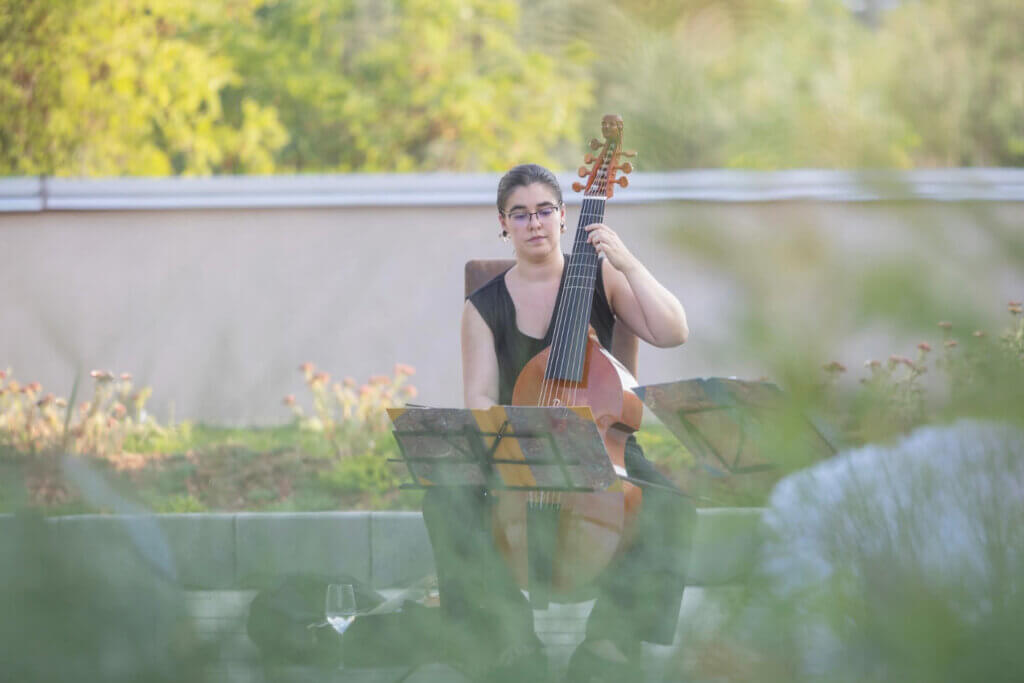
Réka Nagy
tenor viola da gamba
Réka Nagy is a Hungarian viola da gamba and Baroque cello player, currently completing her master’s studies at the Universität Mozarteum Salzburg under the guidance of Vittorio Ghielmi and Marco Testori. Before specialising in early music, she earned degrees in cello performance and music education at the Liszt Ferenc Academy of Music in Budapest.
For many years, Réka has been the solo viola da gamba and continuo player of the Orfeo Orchestra, and she has recorded several French Baroque operas in collaboration with the Centre de musique baroque de Versailles. She has performed with early music ensembles across Europe, including I Barocchisti, Concerto Spiralis, Collegium Marianum, BachWerkVokal Salzburg, and the Budapest Bach Consort, and has appeared as a soloist with both the aforementioned Orfeo Orchestra and the Savaria Baroque Orchestra.
She has drawn inspiration from masterclasses with distinguished musicians such as Bruno Cocset, Balázs Máté, Christoph Urbanetz, Enrico Onofri, Lucile Boulanger, Mónika Tóth, and François Lazarevitch.
Teaching is also an important part of her work. Réka has taught viola da gamba and Baroque chamber music at the Crescendo Summer Institute on two occasions. Since the summer of 2023, she has led the Basso Continuo for Strings masterclass at the Early Music Days in Vác.
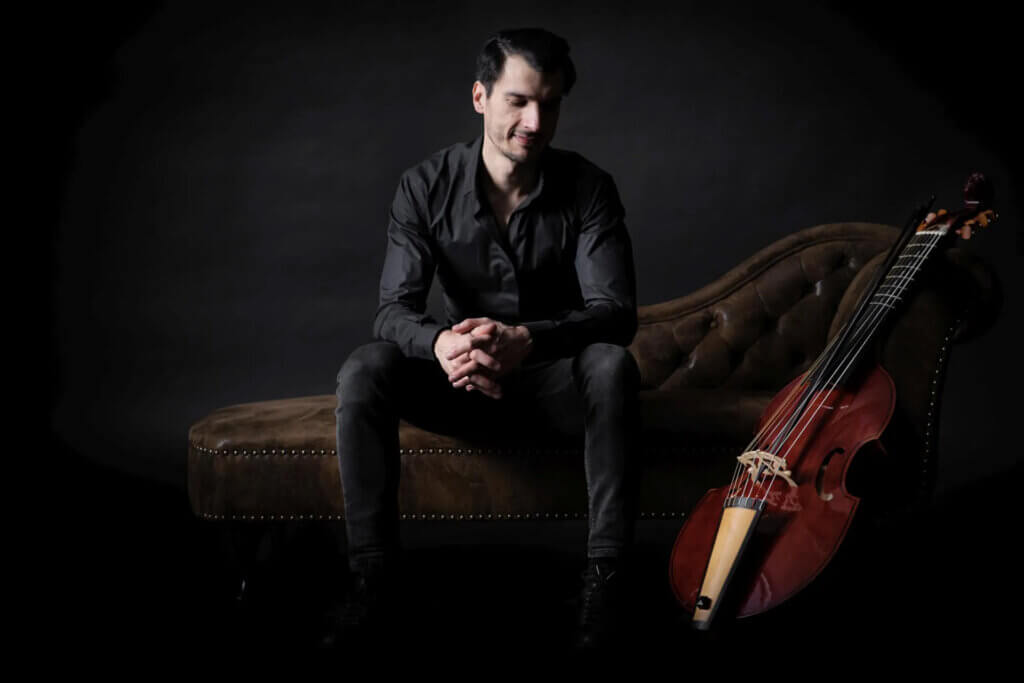
Christoph Urbanetz
bass viola da gamba
With a focus on innovative interpretations and new modes of expression, and always eager to share his enthusiasm for his instrument, the Viennese gamba player Christoph Urbanetz is known for bringing out the groove and energy in the music he performs. As a leading expert on the largely unknown catalogue of performance instructions by Marin Marais, he holds a PhD from the Universität Mozarteum Salzburg. He currently teaches viola da gamba at the music universities in Vienna and Graz, at the Anton Brückner Privatuniversität in Linz, and at the Krzystof Penderecki Academy of Music in Kraków.
Christoph Urbanetz has appeared as a soloist and chamber musician in many of Europe’s most prestigious halls, including the Musikverein and Konzerthaus in Vienna, the Tonhalle Zürich, and the Accademia Nazionale di Santa Cecilia in Rome. He has performed at major early music festivals such as the Salzburger Festspiele, Resonanzen in Vienna, Oude Muziek Utrecht, the Innsbrucker Festwochen der Alten Musik, Schleswig-Holstein Musik Festival, the Ludwigsburger Schlossfestspiele, the Händel Festspiele in Halle, and the London Handel Festival.
Urbanetz performs with leading musicians and ensembles throughout Europe. Highlights of his career include concerts with Concentus Musicus Wien (Nikolaus Harnoncourt), Il Giardino Armonico (Giovanni Antonini), Clemencic Consort (René Clemencic), Orchester Wiener Akademie (Martin Haselböck), Sächsische Staatskapelle Dresden (Reinhard Goebel), Il Suonar Parlante (Vittorio Ghielmi), the Orchestra dell’Accademia Nazionale di Santa Cecilia (Antonio Pappano), and La Cetra (Jordi Savall).
A graduate of the universities of Basel, Salzburg and Paris, Urbanetz has won prizes in several competitions, including the Internationaler Viola da gamba Wettbewerb Bach-Abel in Köthen (2006 and 2009), the viol competition in Seville (2007), the Internationaler H. I. F. Biber Wettbewerb in St. Florian and the International Johann Heinrich Schmelzer Competition in Melk. He has also participated in several masterclasses with Jordi Savall.
Christoph Urbanetz has recorded a number of CDs, including his solo album “The Forqueray Family”, released by Brilliant Classics. Together with Vittorio Ghielmi, he co-edited Decoding Marin Marais, a publication that opens up new perspectives on the aesthetics of French Baroque music.
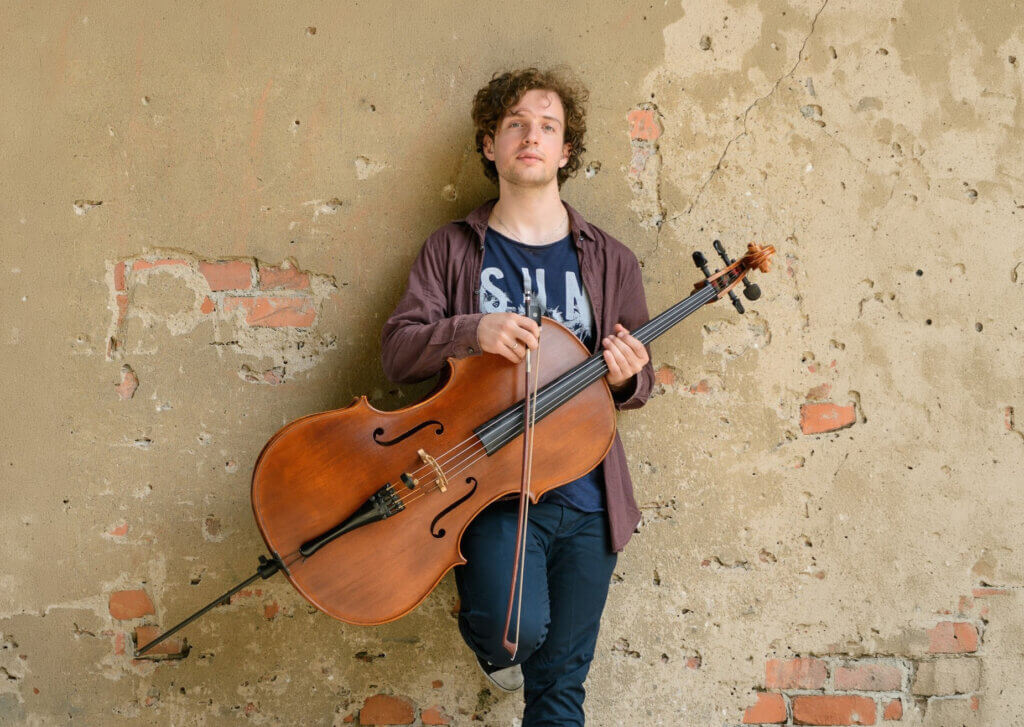
Marius Malanetchi
bass viola da gamba
Marius Malanetchi is a Moldovan-Romanian gambist, cellist, and composer specialising in early music and historically informed performance.
After studying cello and composition in Moldova and at the Conservatoire de Strasbourg, he completed his bachelor’s and master’s degrees at the Universität Mozarteum Salzburg, studying cello with Giovanni Gnocchi and Baroque cello with Marco Testori. He subsequently pursued a second master’s degree in viola da gamba at the Universität für Musik und darstellende Kunst Wien with Christoph Urbanetz. Alongside his instrumental studies there, he completed a master’s degree in composition under Olga Neuwirth and Klaus Lang.
Malanetchi divides his time equally between composition and performance, spanning modern and Baroque cello as well as the viola da gamba. He performs internationally with ensembles such as Bach Consort Wien, Talenti Vulcanici, Ensemble 1700, Ensemble 1756, Musica Ricercata, and the Baltic Sea Philharmonic, and has appeared at major festivals and in renowned venues across Europe and beyond.
As a composer, Malanetchi’s work reflects a deep engagement with instrumental practice. His piece Couleurs du vent, commissioned by Radio France, premiered in Paris in 2025 with the Orchestre Philharmonique de Radio France under Matthias Pintscher. The artist’s music has also been performed by Platypus Ensemble, The Van Swietens, Ars Poetica, and Lux Brumalis.
His artistic profile combines research, historically informed performance, and contemporary composition, giving a unique voice to his artistry that bridges styles and eras through a versatile approach to music.