Metamorfosi
Dialogues of Voices in the Music of the Orient and the Occident
U Trojského zámku 1, Prague 7
Artists
Programme
Claudio Monteverdi (1567–1643)
Si dolce è’l tormento
Kevser Hanım (ca 1880–1950)
Nihâvend Longa
Omar Al Batš (1885–1950)
Zal Ahyaf
Philippe Hersant (* 1948)
L’Ombre d’un doute
Jacopo Peri (1561–1633)
Bella Ninfa fuggitiva
Nicolò Borboni (ca 1591–1641)
Solo e pensoso
Arnold von Bruck (ca 1500–1554)
Mitten wir im Leben sind
John Playford (1623–1686)
When Daphne from Fair Phoebus Did Fly
Stefano Landi (1587–1639)
Passacaglia della vita
Anonymous
Na svatém Kopečku
Al Maya
Bayatî Peşrev
Der makām-ı Hüseynī Sakīl-i Ağa Rıżā
etc.
Annotation
Myths and legends have accompanied human civilisation since its very beginnings and form one of the pillars of human culture. They offered answers to questions about the origins of the world, life, humanity, and death… Set within the extraordinary atmosphere of Troja Château, the evening’s programme traces the roots of both Western and Eastern civilisations, weaving an imaginary musical epic about their transformations. It will be framed by characters from Ovid’s Metamorphoses – the nymphs Echo and Daphne, the singer Orpheus, and the prophetess Sibyl.
The evening’s performers will be renowned musicians from around the world who, through their collaborative synergy, have found their own musical language and sonic landscape. Farsi (traditional music associated with the cultural identity of Persia/Iran) and tarab (traditional Arabic singing characterised by emotional and repetitive forms) will be presented along with choral music, Renaissance polyphony, Baroque passaggi, folk songs, and improvisations. This musical odyssey spans repertoire from the 10th to the 18th centuries, building a bridge between East and West with a clear desire for dialogue and the search for a shared musical heritage. The unique concept of this project was created specifically for the Summer Festivities of Early Music.
Venue
U Trojského zámku 1, Prague 7
Show on mapPartners of the concert
The concert is held in collaboration with the Prague City Gallery.
Artists
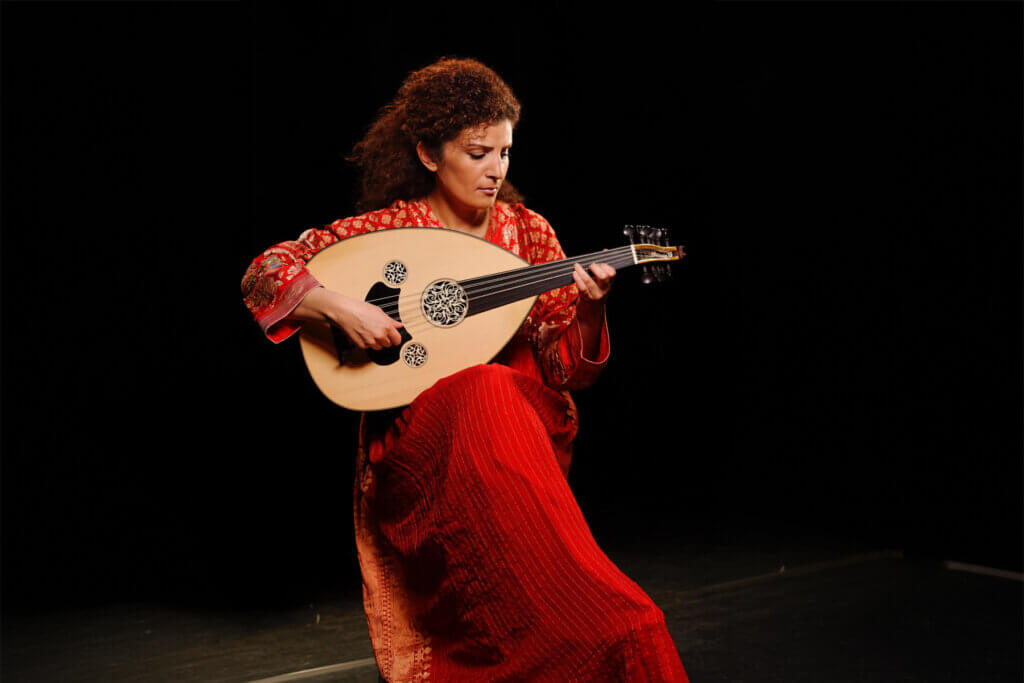
Waed Bou Hassoun
oud, voice
Since 2006, Waed Bou Hassoun has been pursuing an international career as a musician, singer, oud player and composer. She is also an ethnomusicologist. Originally from southern Syria, Waed Bou Hassoun was born in a village near Sweida, into a music-loving family: her father gave her a small oud when she was only seven years old. She sings poems that she gathers from the vast repertoire of pre-Islamic Arabic poetry, as well as from ancient (7th–13th century) mystical Arab-Andalusian sources and from contemporary poets. She performs her own compositions, accompanying herself solo on the oud.
Waed Bou Hassoun has toured solo and in ensembles in the Arab world, in Europe, Canada, South Korea, and Colombia. In 2009, she recorded her first CD, “La voix de l’amour” (Institut du monde arabe), and was awarded the “Coup de cœur” by the Académie Charles Cros the same year. In 2014, she recorded her second solo CD for Buda Musique in Paris, “L’âme du Luth”, for voice and oud. This album also won a “Coup de cœur” from the Académie Charles Cros in 2015. In September 2016, her third CD, “La voix de la Passion”, was released by Buda Musique, followed in March 2019 by her fourth album, “Safar: les âmes retrouvées”, also with Buda Musique.
In parallel with her career as a soloist, Waed Bou Hassoun regularly collaborates with Jordi Savall and his ensemble Hespèrion XXI, both in concert and on recordings. She also works with Jordi Savall as artistic director on the implementation of the Creative Europe project Orpheus XXI – Music for Life and Dignity.
In March 2018, Waed Bou Hassoun was made a Chevalier de l’Ordre des Arts et des Lettres by the French Minister of Culture, Françoise Nyssen. Finally, in 2022, the Middle East and Muslim Worlds Thesis Prize was awarded to Waed Bou Hassoun for her thesis Chants et lamentations dans les rituels funéraires chez les Druzes du sud de la Syrie. Une approche ethnomusicologique, which she defended at the University of Paris Nanterre.
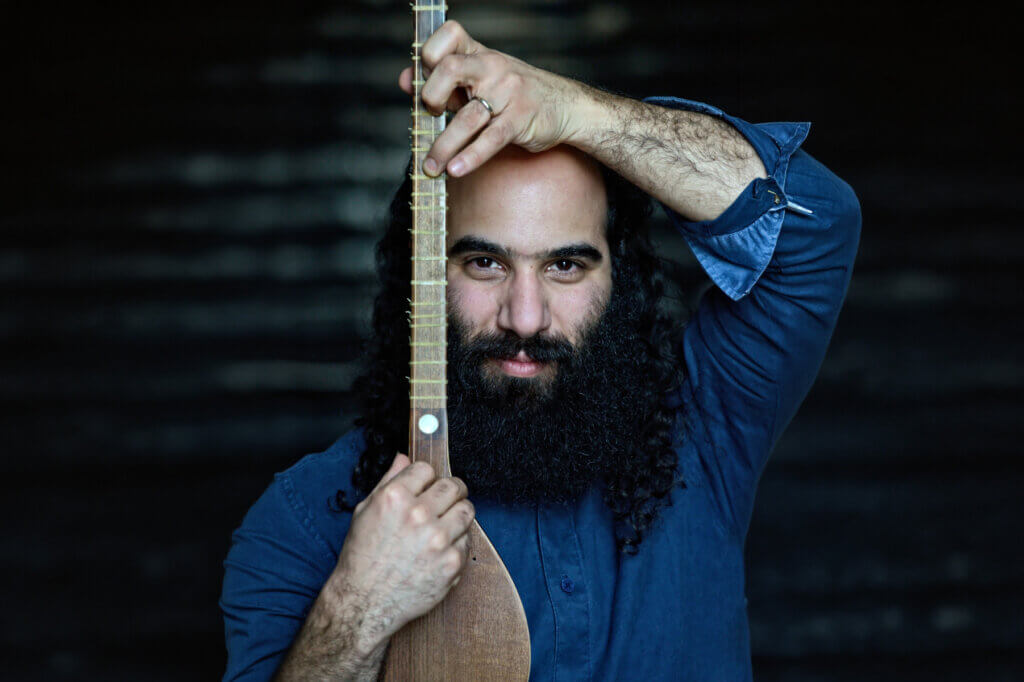
Kiya Tabassian
setar, voice
Kiya Tabassian is a worldly renowned setar virtuoso and composer who has established a prominent international career as a soloist and as the founder and artistic director of the ensemble Constantinople. Known for his cross-cultural musical creations, he performs worldwide and engages in projects that bridge traditions, contemporary music, and improvisation.
He has collaborated with major institutions such as the Orchestre symphonique de Montréal, Canadian Broadcasting Corporation, and the Nouvel Ensemble Moderne, and has taken part in the international MediMuses project dedicated to Mediterranean music research. Since 2009, he has been involved with the Netherlands based chamber Atlas Ensemble and its Atlas Academy educative branch, contributing as a performer and tutor to initiatives linking oral traditions and contemporary music.
In 2015, he founded and directed the first world music residency programme at the Banff Centre for Arts and Creativity. From 2017 to 2022, he served as Associate Artist at the Rencontres musicales de Conques in France, presenting both festival programmes and new creations with Constantinople.
His work has been recognised with major international awards, including the 2024 Juno Award for Best Classical Album (Small Ensemble) and the 2025 Anděl Award for his collaboration with Cappella Mariana.
He is also the artistic director of the Centre des musiciens du monde, a music centre he co-founded in Montreal in 2017, as a space for creation, meetings, exchanges and the transmission of knowledge between professional musicians and the public. For many years, his work has been supported by the Conseil des arts de Montréal, the Conseil des arts et des lettres du Québec and the Canada Council for the Arts.
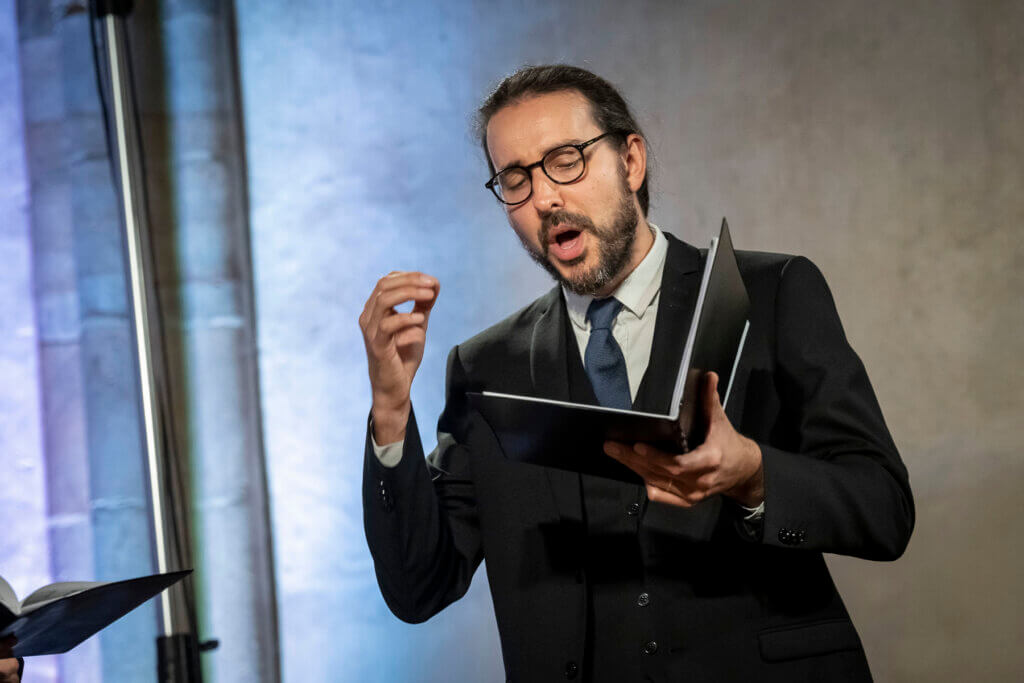
Vojtěch Semerád
voice, Baroque violin
Vojtěch Semerád is a graduate of the Prague Conservatory, the Faculty of Pedagogy of Charles University in Prague (Choirmastering), and the Conservatoire national supérieur de musique et de danse de Paris (Baroque violin with François Fernandez). He is a finalist of the Telemann-Wettbewerb International Competition in Magdeburg. He has been trained as a singer since 2010 throughout private lessons (with teachers such as Chantal Santon Jeffery, Peter Kooij, Poppy Holden) and many masterclasses.
As a solo singer, Vojtěch Semerád is invited by renowned ensembles such as Les Arts Florissants, Ensemble Correspondances, Wroclaw Baroque Orchestra, Vox Luminis, or Huelgas Ensemble, with whom he performs at major international venues and festivals such as Théâtre des Champs-Elysées, Park Avenue Armory in New York, Logan Center for the Arts in Chicago, Concertgebouw Rotterdam, Wigmore Hall in London, Palau de la Música Catalana in Barcelona, etc. He has taken part in several opera productions, and has recently sung the role of Acis in Georg Friedrich Handel’s Acis and Galatea, the role of Atys in Jean-Baptiste Lully’s Atys, the role of Pythonisse in David et Jonathas and Histoires Sacrés by Marc-Antoine Charpentier, or The Fairy Queen by Henry Purcell. He is regularly invited as the Evangelist in passions and oratorios by Johann Sebastian Bach.
Vojtěch Semerád is the artistic director of the vocal ensemble Cappella Mariana, with which he performs forgotten works of vocal polyphony of Middle Ages, Renaissance and Baroque era. Today the ensemble is regularly invited to the prestigious festivals, a.o. Oude Muziek Utrecht, MAfestival Brugge, Voices of Passion in Leuven, Laus Polyphoniae in Antwerpen, Klangvokal Musikfestival Dortmund, Prague Spring, Innsbrucker Festwochen der Alten Musik, Tage Alter Musik Regensburg, Summer Festivities of Early Music and Concentus Moraviae. The ensemble received the Czech Angel Award for Best Recording in the category of Classical Music for 2024 for the project Pilgrimage.
As a violinist, Vojtěch Semerád is a permanent member of the Collegium Marianum ensemble and also performs in multi-genre and original musical projects.
He has recorded for Deutsche Gramophon, Naïve, Harmonia Mundi, Passacaille and Supraphon, in total more than 30 recordings, and also regularly records for Czech Radio. Vojtěch Semerád is also a researcher, focusing on the discovery of 15th, 16th and 17th century vocal music in Central Europe.
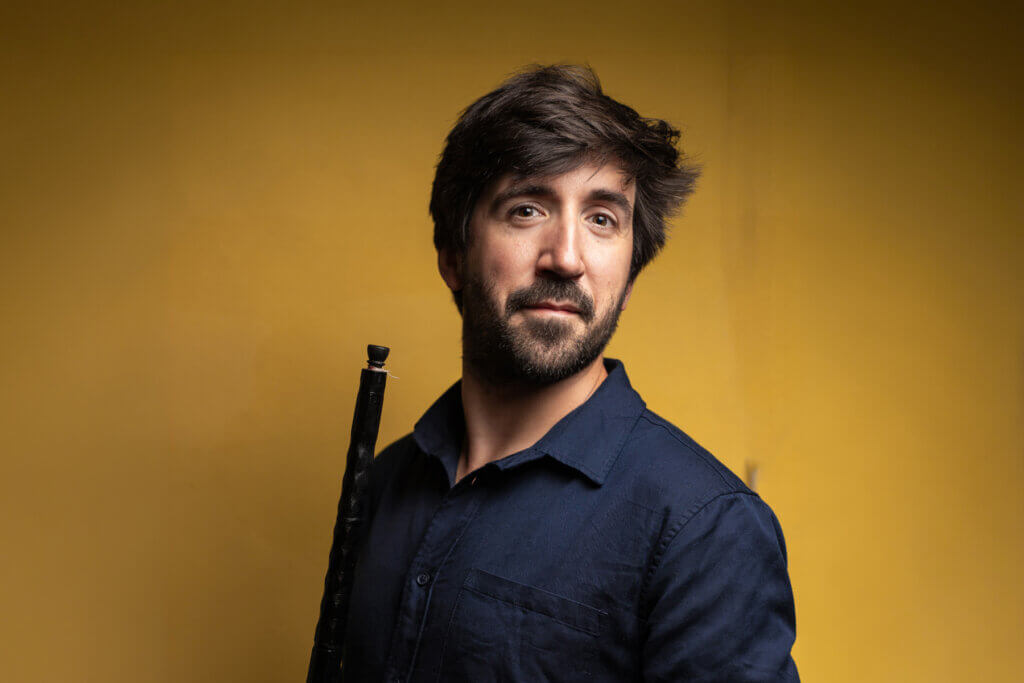
Lambert Colson
cornetto, flutes
Lambert Colson began his musical training as a recorder player with Françoise Defours, continuing his studies with Pedro Memelsdorff, Bart Coen, Marleen Leicher, Bruce Dickey, and Gebhard David. He graduated from renowned institutions, including the Conservatoire royal de Bruxelles, the Escola Superior de Música de Catalunya in Barcelona, the Schola Cantorum Basiliensis and the Hochschule für Künste in Bremen.
As a recorder and cornetto player, he has been invited to perform with conductors and ensembles such as Scherzi Musicali (Nicolas Achten), Le Poème Harmonique (Vincent Dumestre), Holland Baroque, Ensemble La Fenice (Jean Tubéry), Pygmalion (Raphaël Pichon), B’Rock Orchestra, Collegium Vocale Gent (Phillipe Herreweghe), Ensemble Correspondances (Sébastien Daucé), Cappella Mediterranea (Leonardo García-Alarcón), and Continuum, among others.
He also leads artistic projects with his own ensemble, InAlto. In recent years, the recordings of InAlto have received widespread critical acclaim across Europe, earning distinctions including the Diapason d’or & Diapason d’or de l’année 2017, the Choc-Classica (Classica), the Joker absolu (Crescendo), 5 stars from Rondo Magazin, and choice of the year in both Libération and Le Monde. Lambert Colson is also active as a researcher and has been commissioned to write for the literary magazine La pensée de midi (issued by the French Actes Sud publishing house).
As a teacher, he has been invited to give lectures and masterclasses in La Fondation Royaumont on topics such as the history of Western music notation or Luther and the music in the Holy Roman Empire. Besides participating in various masterclasses, he currently teaches cornetto and historical performance practice at the Conservatoire royal de Bruxelles and at the Haute école de musique de Genève.
In addition to his teaching activities, and driven by a continuing interest in performance practice, Lambert Colson has been a research fellow at the Conservatoire royal de Bruxelles since September 2017. His research focuses on historical instruments making, paying particular attention to identifying specific instrument models associated with specific repertoires in European museum collections.
A keen interest in unconventional collaborations led him to explore the use of hypnosis in the creative process in collaboration with choreographer Catherine Contour. Driven by his desire to expand his musical perspectives on the cornetto, he has also worked with contemporary composers such as Zad Moultaka, Fabrice Fitch, and Bernard Foccroulle on new compositions and has collaborated with pop, rock and jazz artists including Shara Nova (formerly known as Shara Worden), the Icelandic musician Mugison and the Danish band Efterklang in association with the Box collective. More recently, he has been involved in a range of improvised music projects in collaboration with artists such as An Pierlé, Liesa Van der Aa, Emmanuel Baily, Xavier Rogé, Adam Woolf, Frank Vaganée, and Jon Birdsong.
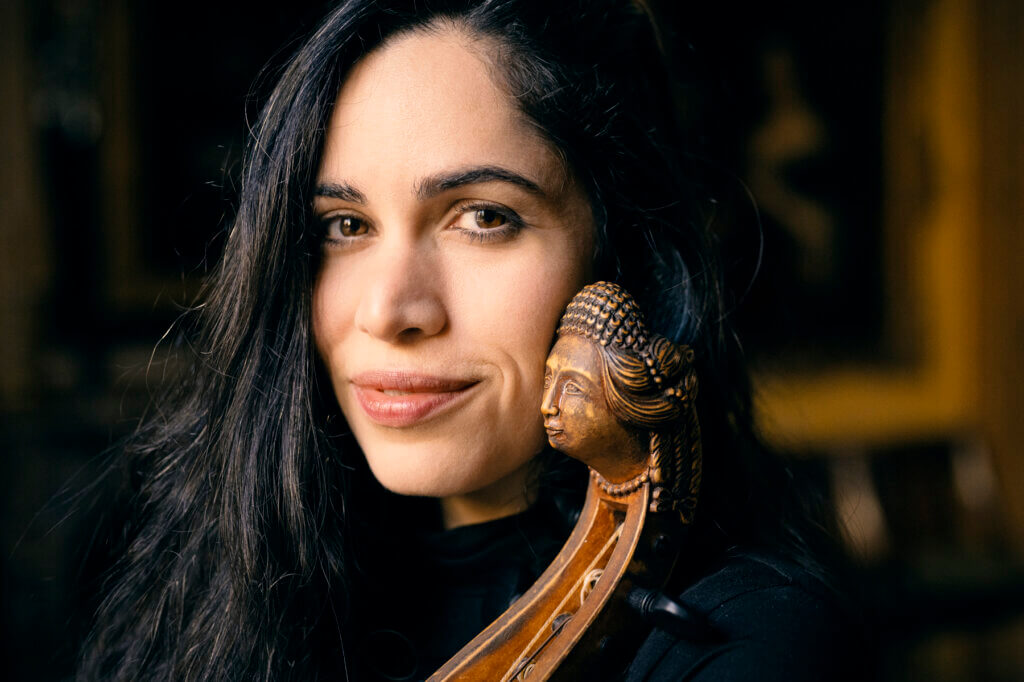
Lucile Boulanger
viola da gamba
Lucile Boulanger began learning the viola da gamba at the age of five with Christine Plubeau, before going on to study with Ariane Maurette, Jérôme Hantaï, and finally Christophe Coin at the Paris Conservatoire. She has won numerous prizes at prestigious international competitions, including the Bach-Abel Competition in Köthen and the Musica Antiqua Competition in Bruges.
Greatly in demand as a chamber music artist, she has played and recorded with Philippe Pierlot and the Ricercar Consort, François Lazarevitch, Justin Taylor, and Pierre Hantaï; she also regularly performs with larger ensembles such as Ensemble Pygmalion, directed by Raphaël Pichon.
She appears frequently as a recitalist, both in France and internationally. Her recordings for Alpha Classics and Harmonia Mundi labels have received numerous awards and widespread public acclaim.
Refusing to regard the viol as the vessel of a bygone aesthetic tradition, she uses her programmes to expand and re-energise the repertoire of her instrument, not only through the practice of transcription but also through contemporary works. Several compositions have already been dedicated to her.
Lucile Boulanger is also involved in a number of unusual collaborations, including projects with accordionist Théo Ould, clarinettist Christian Elin, and electronic music artist Calling Marian. She takes part in several stage productions, such as Phénix by choreographer Mourad Merzouki (on tour since 2022) and Bartabas’s upcoming equestrian show (late 2026).
She was awarded the Victoire de la musique classique 2025 in the Instrumental Soloist category. Lucile Boulanger currently teaches the viola da gamba at the Conservatoire royal de Bruxelles and was recently appointed professor at the Conservatoire national supérieur de musique et de danse de Paris.